
The Constitution of Ghee: Ultimate Guide to Purity & Benefits
Are you searching for authentic, unadulterated pure ghee for your family? In a market saturated with palm oil adulteration, hydrogenated vanaspati, and machine-separated cream ghee, knowing how to verify genuine purity is vital. Here is your definitive master guide to ghee purity and quality standards.

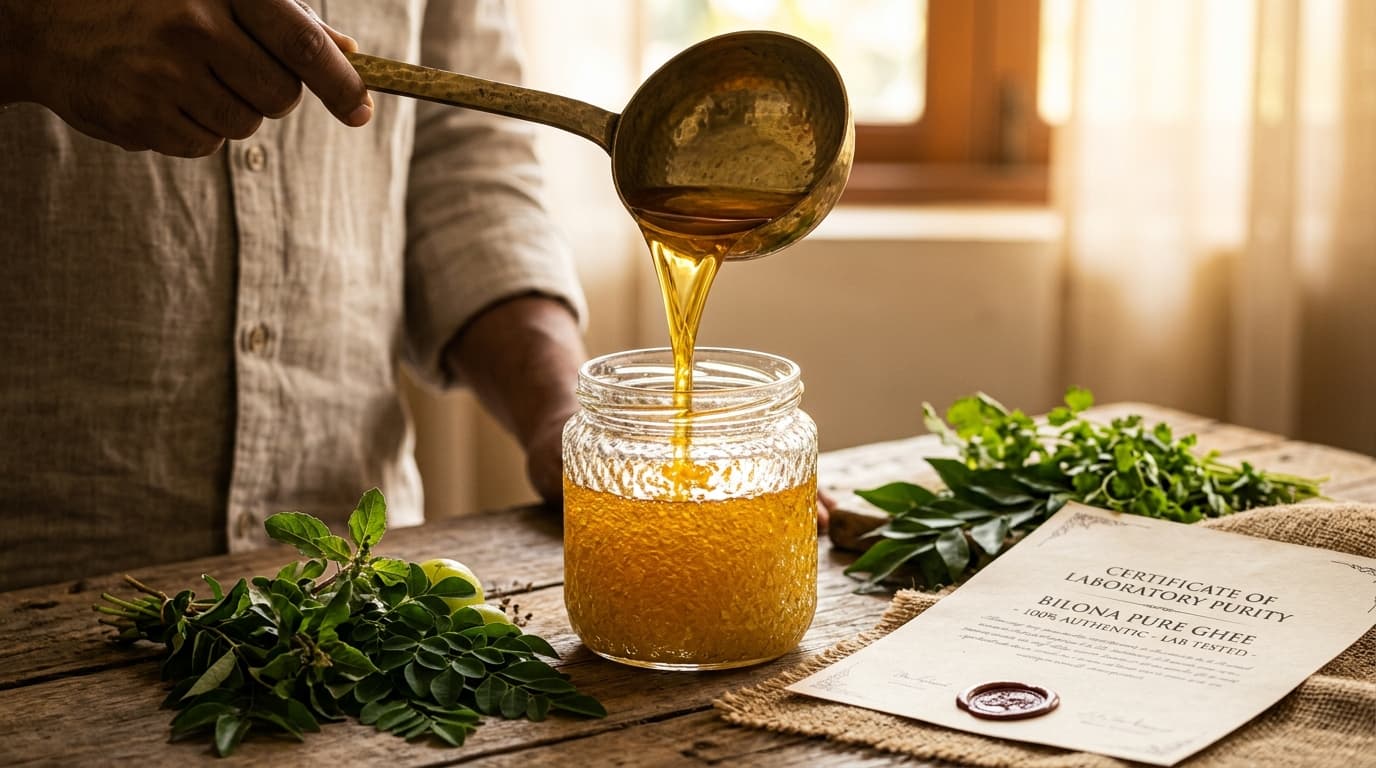
Laboratory certified pure Bilona Ghee with crystal clear golden purity
Scientific Parameters of Pure Ghee (FSSAI Standards)
- Free Fatty Acids (FFA): Must be below 1.40% by FSSAI law. ValonaVritti tests consistently at < 0.28%, proving exceptional freshness and zero rancidity.
- Reichert-Meissl (RM) Value: The RM value measures volatile fatty acids unique to pure milk fat. Pure cow/buffalo ghee must exceed 28.0. ValonaVritti batches test at 31.4.
- Baudouin Test: Confirms 100% absence of hydrogenated vegetable oil (Vanaspati) or sesame oil adulterants.
- Moisture Content: Must be below 0.30% to prevent microbial growth and ensure a natural 12-month shelf life without chemical preservatives.
3 Easy DIY Home Purity Tests
1. The Palm Heat Liquefaction Test
Pure Bilona ghee has a melting point near human body temperature (32°C–37°C). Place half a teaspoon on your palm; authentic ghee begins melting within seconds. If it stays waxy or greasy, it contains hydrogenated vegetable fats.
2. The Heat & Aroma Pan Clarification Test
Heat a spoon of ghee in a pan over medium heat. Genuine ghee melts instantly and turns a rich golden-brown with a distinct nutty caramelized aroma. Fake ghee takes longer to liquefy and turns clear yellow without fragrance.
3. The Iodine Starch Detection Test
Melt a small amount of ghee and add 2 drops of Iodine solution. If the mixture turns purple or blue, the ghee is adulterated with boiled starch or mashed potatoes.
Taste Authentic Jamkhambhaliya Ghee
Handmade in Devbhumi Dwarka, Gujarat from grass-fed whole milk. Starting at ₹749 (500g) and ₹1,199 (1kg) with free pan-India shipping.